Gimpo Airport to Seoul is a subway ride, not an airport-bus trip
Cite this page
Hwang, J. (2026). Gimpo Airport to Seoul is a subway ride, not an airport-bus trip. Korea, Verified. https://koreaverified.com/gimpo-airport-to-seoul/ (checked 4 October 2026)
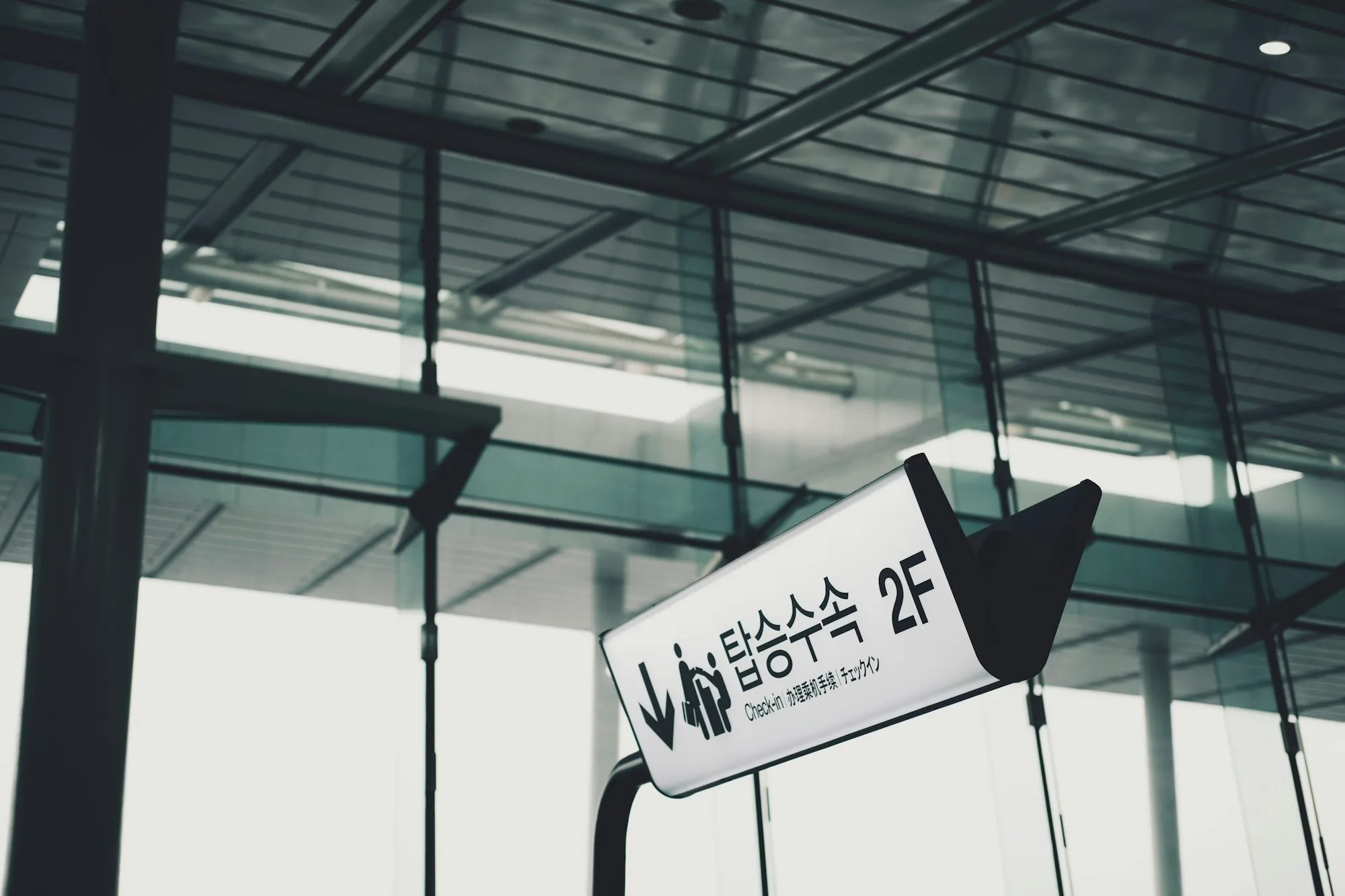
Gimpo airport’s own English transport page lists exactly two limousines. One goes to Incheon, and the other runs to Nowon in the north-east of the city. That second one has not picked up at the international terminal since March 2020, and the page prices it at 7,500 won against the 9,000 won its operator now lists.
So the bus is rarely your answer from Gimpo. The airport sits inside Seoul, and the station underneath it carries five railway lines, most of them on the city’s own Climate Card. This page is about that station, and about the one bus page that has gone out of date.
Is Gimpo airport in Seoul?
It is. The airport’s address is 112 Haneul-gil, Gangseo-gu, Seoul, on the city’s western edge. That is the difference from Incheon, which is on an island outside the city and reached by a dedicated airport railway and a fleet of limousines.
Gimpo has two terminals, one domestic and one international. The airport operator names both on its transport page. The railway station describes itself as sitting in the middle of the airport and serves both.
From Gimpo airport to Seoul: the station
The airport railway operator publishes the station’s layout, and it answers the most common question on arrival, which is where to stand.
| Level | Trains leaving from here |
|---|---|
| B2 | Line 5 towards Banghwa; Gimpo Goldline towards Yangchon |
| B3 | AREX towards Seoul Station; Line 9 towards the city (express and local); Line 5 towards Sangil-dong |
| B4 | AREX towards Incheon Airport; Line 9 towards Gaehwa |
The ticket hall is on B1, with four ticket machines and a machine for reclaiming the deposit on single-journey cards. The station page also lists a convenience store among its facilities. The fifth line, the Seohae line north to Ilsan, is named as a connection on the same page but not placed on a level.
The express does not stop here. The AREX express runs from Seoul Station to Incheon Terminal 1 and Terminal 2 with no stops in between. Every AREX train you can board at Gimpo is the all-stop train, which takes an ordinary transit card.
Line 9 has an express too, and this one does stop. The station page lists both express and local Line 9 trains on the city-bound platform.
The Seoul-bound lift is at car 5, door 4. The station puts the lift for trains towards Seoul Station at platform position 5-4, which is worth knowing with a suitcase. If you would rather leave the suitcase behind for a few hours, the two staffed counters at Gimpo, one of them on the Line 5 side of this station, are on the Gimpo airport luggage storage page.
Gimpo airport to Seoul Station: what the train costs
These are the operator’s all-stop fares from Gimpo, adult, paid with a transit card such as T-money.
| From Gimpo Airport to | Transit card |
|---|---|
| Seoul Station | 1,750 won |
| Gongdeok | 1,750 won |
| Hongik University (Hongdae) | 1,650 won |
| Digital Media City | 1,650 won |
| Incheon Airport Terminal 1 | 4,350 won |
| Incheon Airport Terminal 2 | 4,950 won |
A single-journey card costs 100 won more per trip and holds a 500 won deposit, which you get back from the machine at the station where you get off. If you are staying more than a day, a T-money card is the better buy, and what it actually saves you is mostly in the transfers rather than the fare.
Line 5 and Line 9 charge Seoul’s ordinary distance-based subway fare. The city’s fare page sets a base fare for the first 10 km and adds a charge for every 5 km after that, and the T-money page has the base fare itself.
Gimpo airport to Myeongdong has no direct train. The simplest route is the airport railway to Seoul Station and a change to Line 4, which the operator lists as one of the connections there.
From Gimpo airport to Gangnam, Line 9 is the line to look at. I have not checked its fares or journey times from Gimpo, so read those off the station display rather than off this page.
The last train from Gimpo airport
The operator’s timetable for Gimpo station runs to a row headed 24, which means after midnight. On both the weekday and the holiday timetable, the last two trains towards Seoul leave at 16 and 34 minutes past midnight. Trains towards Seoul reach Gimpo after leaving Incheon, so a late landing here has longer to make the platform, and that is the strongest reason to choose Gimpo for a late flight. Under the Gimpo curfew, no flight lands between 11 pm and 6 am, so the after-midnight trains serve flights that landed before 11 pm.
One thing the timetable does not make clear in text is which late trains run all the way to Seoul Station. It names two destinations for Seoul-bound trains, Seoul Station and Digital Media City, and the published page does not say which one each late departure has. Digital Media City comes before Hongdae on the way in, so a train marked for it will not get you to Hongdae or Seoul Station. If you land late, check the destination on the platform display before you board. I have not confirmed which of the late trains, if any, runs through to Seoul Station.
I have not checked the last Line 5 and Line 9 trains from Gimpo. Those are run by other operators and are not on the airport railway’s page.
The bus page nobody updated
Gimpo’s English transport page, run by Korea Airports Corporation, lists the 6101 limousine to Surak and Nowon. It gives a cash fare of 7,500 won and a last bus at 22:30. It says the bus boards at stop 5 of the domestic terminal and that it stopped serving the international terminal on 30 March 2020. Its footer reads 2020, and the only other dates on it, a new timetable from 27 July and another from 1 August, carry no year.
The company that runs the 6101 publishes different figures. Its page gives an adult fare of 9,000 won and a child fare of 6,000 won. It lists the last bus towards the city (시내행) at 21:10 and the last bus towards the airport at 19:50. On this route the city-bound direction begins at Gimpo, so 21:10 is most likely the last departure from the airport. The per-stop timetable is drawn by a script and is not in the page’s text, so if you are cutting it close, treat 21:10 as the latest you can count on and ask at the stop.
| 6101 limousine | Airport page | Bus company |
|---|---|---|
| Fare as printed | 7,500 won (cash) | 9,000 won (adult) |
| Last bus into the city | 22:30 | 21:10 |
Go by the bus company, because it is the one selling the ticket. An airport page that nobody updated reads exactly like a current one, and nothing on this one tells you which year its timetable belongs to.
The same airport page lists the 6707A limousine to Incheon at stop 14 of the domestic terminal, leaving 10 minutes earlier from the international terminal. Its own figures do not agree with each other: the summary line gives a last bus at 21:30, and the timetable printed under it ends at 21:00. I have not checked either against the bus company’s current timetable, so treat both as unverified and use the train, which costs 4,350 won to Terminal 1. Connecting from Incheon to a domestic flight here is the same line the other way, and it is not the express.
The page also says, in effect, that there are ordinary city buses too, and sends you to a map search for them rather than listing them.
Does the Climate Card work from Gimpo airport to Seoul?
Yes, and at Gimpo it works in both directions.
Seoul’s Climate Card is drawn on a map of the city. From 1 October 2026 the short passes cover the subway inside Seoul, getting off at Incheon Airport, and Seoul’s own city and village buses. The city’s Q&A on the change adds that the neighbouring cities once included, Gimpo and Goyang among them, are now outside it. The lines that matter at Gimpo:
| Line | Covered |
|---|---|
| AREX | Gimpo Airport to Seoul Station |
| Line 5 | Inside Seoul only |
| Line 9 | Inside Seoul |
| Gimpo Goldline | Not into Gimpo city |
| Seohae line | Not into Goyang (Ilsan) |
| Airport buses | Not covered |
Updated 4 October 2026. This table used to list all of Line 5, all of the Gimpo Goldline and the Seohae line from Ilsan as covered. That was the reach before 1 October. Seoul’s page on the passes that continue now excludes Gimpo, Goyang, Gwacheon, Guri, Seongnam, Hanam and Namyangju, which takes the Goldline’s stops in Gimpo city, Ilsan on the Seohae line and the Hanam end of Line 5 out of the pass. Treat a stop outside Seoul as a paid fare.
At Incheon, the pass works in one direction. You may board inside the zone and get off at Incheon Terminal 1 or 2, but you may not board there, so on arrival day a pass holder landing at Incheon pays for the train. Gimpo station is inside the zone, so the pass works from the moment you reach the platform.
The short passes cost 5,000 won for 1 day, 8,000 won for 2 days, 10,000 won for 3 days, 15,000 won for 5 days and 20,000 won for 7 days. The 1-day pass runs until the last train on the day you charge it. The physical card is 3,000 won. The city sells them from the newer ticket machines at Seoul Metro stations on Lines 1 to 8 and at convenience stores near Line 9 stations. Gimpo station is on both lines, but I have not confirmed that its machines sell the pass. The 30-day version can no longer be charged at all, and why it is going has its own page.
What is not checked here yet
AREX fares, the Gimpo station layout, the timetable and the express’s lack of stops come from the airport railway operator’s own Korean pages, read on 27 September 2026. Climate Card coverage and prices come from the Seoul city government’s page. The 6101 figures come from the airport operator’s English page and from the bus company’s page, both read the same day, and the table above prints both rather than choosing one silently.
Not checked: the walk from the international terminal to the station, and how long it takes; the journey time from Gimpo to Seoul Station, which the operator does not print for this stop; last trains on Line 5 and Line 9; and taxi fares. None of these has an official figure on the pages above, so none is given here.
If you are landing at Incheon instead, that is a different trip with different last trains. If you have been through Gimpo recently and something here is wrong, tell me.
Questions people actually ask
- Is Gimpo airport in Seoul, and how do you get from Gimpo airport to Seoul?
- Yes. Gimpo's address is Haneul-gil, Gangseo-gu, Seoul, so it sits inside the city on its western edge. Take the train from the station under the airport: the airport railway (AREX) all-stop train reaches Seoul Station for 1,750 won on a transit card, and Line 5 and Line 9 of the Seoul subway stop at the same station. The only city limousine on the airport's own English transport page is a single bus to the north-east of the city that no longer picks up at the international terminal.
- Does Gimpo airport have multiple terminals?
- Two: a domestic terminal and an international terminal, both named on the airport operator's own transport page. The railway station, which the rail operator describes as sitting in the middle of the airport, serves both. The difference matters for buses: the 6101 limousine to Nowon boards only at the domestic terminal, at stop 5, and the operator's page says it stopped serving the international terminal on 30 March 2020.
- Where is AREX at Gimpo airport, and which platform goes to Seoul Station?
- Underground. The station is four levels deep, and trains for Seoul Station leave from the third basement level, the same level as Line 9 towards the city and Line 5 towards Sangil-dong. Trains for Incheon Airport leave from the fourth. Only the all-stop train calls at Gimpo: the AREX express runs from Seoul Station to Incheon without stopping, so an express ticket is no use to you here.
- Does the Climate Card work from Gimpo airport to Seoul?
- Yes, and unlike at Incheon, an arriving passenger can use it from the start. From 1 October 2026 the short passes cover the subway inside Seoul, which takes in the airport railway from Gimpo Airport to Seoul Station and Lines 5 and 9 within the city; Gimpo city and Goyang are now outside the pass, so the Goldline into Gimpo city is not covered. At Incheon it works the other way only: you may get off there, but you may not board there. Airport buses are not covered at either airport.
- Is there a bus from Gimpo airport to Myeongdong?
- Not one the airport operator lists. The only city limousine on Gimpo's English transport page goes to Surak and Nowon in the north-east. For Myeongdong, take the airport railway to Seoul Station and change to Line 4. Ordinary city buses also stop at Gimpo, and the airport's page sends you to a map search for those rather than listing them.
Where these numbers came from
Read on . 8 of 9 are Korean-language primary pages.
- AREX, all-stop train fares by station KO
- AREX, Gimpo Airport station: timetable, platforms and connecting lines KO
- AREX, all-stop train service and the lines each station connects to KO
- AREX, express train service (Seoul Station to Incheon, no intermediate stops) KO
- Seoul Metropolitan Government, Climate Card coverage, pass prices and where to buy KO
- Seoul Metropolitan Government, Q&A: coverage of the short passes that continue from 1 October 2026 KO
- Seoul Metropolitan Government, public transport fares KO
- Korea Airports Corporation, Gimpo International Airport public transport page (English)
- Korea City Air Terminal (CALT), 6101 limousine route, fare and first and last buses KO