Gimpo vs Incheon airport: one railway line, not two
Cite this page
Hwang, J. (2026). Gimpo vs Incheon airport: one railway line, not two. Korea, Verified. https://koreaverified.com/gimpo-vs-incheon-airport/ (checked 4 October 2026)
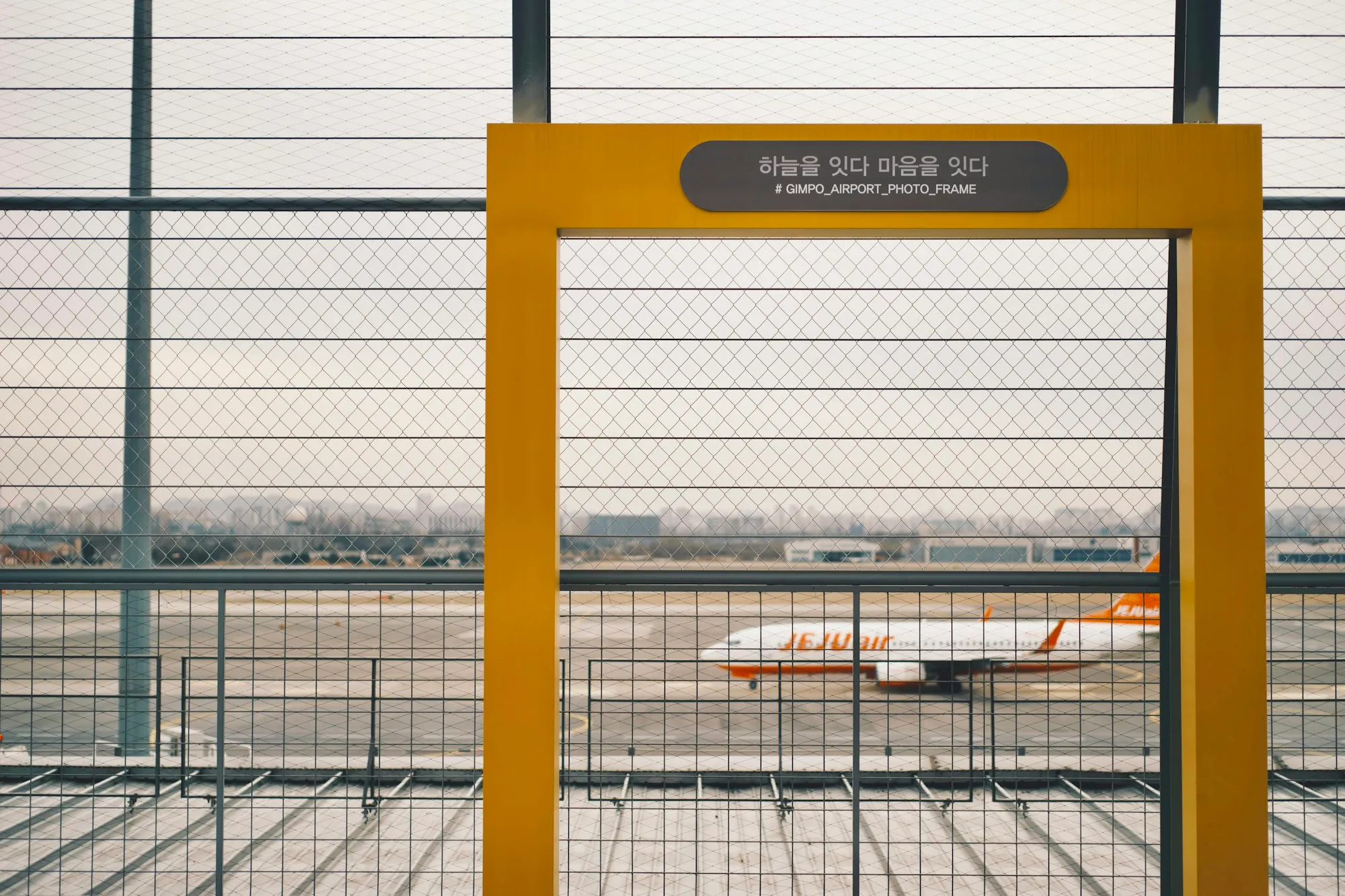
Gimpo and Incheon are two stops on one railway. The airport railway starts at Incheon, runs through Gimpo, and ends at Seoul Station, so landing at Gimpo means boarding the same line further along. That one fact explains the fare, the last train and the travel pass, and the rest of this page is the figures.
Gimpo vs Incheon airport: the numbers side by side
These are the airport railway operator’s own figures, adult, on a transit card such as T-money, read on 4 October 2026.
| To Seoul Station | Gimpo | Incheon Terminal 1 |
|---|---|---|
| All-stop train fare | 1,750 won | 4,750 won |
| Express | Does not stop at Gimpo | 13,000 won, 43 min |
| Last Express | None | 22:48 |
| Last all-stop train towards Seoul (weekday) | 34 min past midnight | 56 min past 11 pm |
| Climate Card on arrival | Inside Seoul’s zone | Cannot board with it |
From Incheon Terminal 2 the all-stop fare is 5,350 won and the last weekday departure towards Seoul is 50 minutes past 11 pm. A single-journey card costs 100 won more per trip at either airport.
The fare gap on the all-stop train is 3,000 won per person, each way. That is real money for a family and not a reason on its own to choose a flight. The timetable is.
Is Gimpo airport better than Incheon? Look at the landing time
Gimpo gives a late arrival more room, though not because its trains run later into the city. Gimpo’s station timetable lists two trains towards Seoul after midnight, at 16 and 34 minutes past on the weekday table. Incheon Terminal 1’s last two weekday departures towards Seoul are at 38 and 56 minutes past 11 pm. The operator prints each hour as one row of minutes, and these are read off those rows.
Read that again. The gaps match, which fits the same two trains seen at two stations on one line. The operator does not print stop-by-stop times, so treat it as likely rather than confirmed. Either way, the train does not reach the city any later for you. What Gimpo gives you is a later deadline to be on the platform, because the last train is already part of the way in when it reaches you.
Now put a flight on it. Asiana’s winter timetable, which starts on 25 October 2026, lands its last daily Haneda flight at Gimpo at 22:35 and its last Osaka flight at 22:25. Land at Gimpo at 22:35 and you have until 34 minutes past midnight to reach the platform. At Incheon Terminal 1 the same evening ends at 56 minutes past 11 pm, and the last Express goes at 22:48.
The bet only holds if the flight lands on time. Gimpo closes to take-off and landing at 11 pm, and an evening flight that runs late is sent to Incheon; the curfew and what it has done to late flights are on the Gimpo airport opening hours page.
One catch at both airports. The all-stop trains run either to Seoul Station or only as far as Digital Media City, and the Terminal 1 timetable names both destinations without saying in its text which late train goes where. Digital Media City is short of Hongdae and Seoul Station. So treat the last departure at either airport as a train towards the city, and read the destination on the platform display before you board.
Incheon wins on choice. Gimpo’s international list is short, and Incheon has the Express: nonstop, 43 minutes from Terminal 1 to Seoul Station, for 13,000 won. If your hotel is near Seoul Station and you land in daylight, the Express removes most of Gimpo’s advantage.
Does Gimpo airport have international flights?
It does, a short list of them, all short-haul. Asiana’s own winter timetable flies daily to Gimpo from these two Japanese airports:
| From | Asiana flights into Gimpo | Lands |
|---|---|---|
| Tokyo Haneda | OZ1055, OZ1075, OZ1035 | 11:15, 14:40, 22:35 |
| Osaka | OZ1135, OZ1155 | 13:05, 22:25 |
The timetable runs from 25 October 2026 to 27 March 2027 and lists a few cancelled flights on 16 and 17 December.
Where else does Gimpo airport fly to? Airline listings show Gimpo flights to Shanghai Hongqiao, Beijing and Taipei Songshan as well. The airport’s own schedule page draws its table with a script, so this page could not read it, and none of those three is checked here against an airline timetable. Treat them as routes to search for, then confirm the arrival airport on your booking. The booking is the only document that settles which airport you land at.
The list stops at Japan, China and Taiwan, held there by a transport ministry rule that caps Gimpo international flights at 2,000 km and by Incheon’s hub policy. The rule, and the routes read off airline notices and news reports, are on the Gimpo airport international flights page.
If you are flying from Japan, the Japan page covers the entry side of the same trip.
Is Gimpo airport closer to Seoul than Incheon?
Gimpo airport is inside Seoul. The airport operator gives its address as Haneul-gil, Gangseo-gu, Seoul, on the western edge of the city, and the rail operator lists Lines 5 and 9, the Gimpo Goldline and the Seohae line as transfers at Gimpo Airport station. Incheon airport is outside the city, and the Express is the fastest way in at 43 minutes from Terminal 1.
That location is also why Seoul’s Climate Card behaves differently at the two airports. From 1 October 2026 the city’s short passes cover the subway inside Seoul, and make one exception for Incheon: you may ride in and get off at Terminal 1 or 2, but you may not board there. So on arrival day at Incheon a pass holder pays for the train. Gimpo Airport station sits inside Seoul, which puts it under “the subway inside Seoul”, but the city’s pages do not name the station individually. Treat the pass as likely valid from Gimpo to Seoul Station and check at the gate the first time. The short passes cost 5,000 won for 1 day and 20,000 won for 7 days.
The same change took Gimpo city and Goyang out of the pass. The Goldline into Gimpo city is now a paid fare, which our Gimpo station page had wrong until today and now corrects.
Airport buses are outside the Climate Card at both airports.
Landed at the other one by mistake?
The same railway links the two airports. The Express does not stop at Gimpo, so the all-stop train is the one to take between them. Connecting between Incheon and Gimpo has the fare and the rest of that trip.
A correction to our own Incheon page
Our Incheon Airport to Seoul page said that if you missed the last Express at 22:48, you were choosing between a night bus and a taxi. The operator’s own Terminal 1 timetable lists all-stop departures towards Seoul in the 11 pm hour at 03, 19, 38 and 56 minutes past, on weekdays. That page leaned on the Express timetable and left out the cheaper train running behind it. It now says so, with today’s date on the change.
What is not checked here
Fares and timetables come from the airport railway operator’s Korean pages, the Japan flights from Asiana’s own notice, and the Climate Card rules from the Seoul city government, all read on 4 October 2026.
Not checked: which late all-stop trains run through to Seoul Station rather than stopping at Digital Media City; the holiday timetable at Incheon after 23:00, which the station page did not show in text; Korean Air, Japanese and Chinese airlines’ Gimpo flights; journey time from Gimpo to Seoul Station, which the operator does not print for this stop; and the walk from either arrivals hall to the platform. Each of those changes a late arrival, so leave a margin.
If you have landed at either airport recently and something here is wrong, tell me.
Questions people actually ask
- Is Gimpo airport better than Incheon?
- For getting into Seoul, yes. The airport railway from Gimpo to Seoul Station is 1,750 won on a transit card, against 4,750 won on the all-stop train from Incheon Terminal 1 and 13,000 won on the Express. Gimpo's last two trains towards Seoul leave at 00:16 and 00:34 on the weekday timetable, against 23:38 and 23:56 from Incheon Terminal 1, so a late arrival at Gimpo has longer to reach the platform. Incheon wins on choice: Gimpo's international flights are a short list of short-haul routes.
- Does Gimpo airport have international flights, and where does Gimpo airport fly to?
- Yes, a short list of them. Asiana's own winter timetable, running from 25 October 2026 to 27 March 2027, flies daily from Tokyo Haneda and from Osaka to Gimpo. Airline listings also show Gimpo flights to Shanghai Hongqiao, Beijing and Taipei Songshan, which this page has not checked against an airline timetable. For anything further, search Incheon (ICN).
- Is Gimpo airport closer to Seoul than Incheon?
- Yes. Gimpo's address is in Gangseo-gu, Seoul, so it sits inside the city on its western edge, and its station is on the Seoul subway. Incheon is outside the city and reached by the airport railway: the Express takes 43 minutes from Terminal 1 to Seoul Station without stopping.
- How far is Gimpo airport from Incheon, and is there a train between them?
- They are stations on the same airport railway, which starts at Incheon Airport and runs through Gimpo Airport to Seoul Station. The Express does not stop at Gimpo, so the all-stop train is the only one that links the two airports. Trains towards Seoul reach Gimpo after Incheon, which is why the last one leaves Gimpo later.
Where these numbers came from
Read on . 10 of 11 are Korean-language primary pages.
- AREX, all-stop train fares by station (station to station grid) KO
- AREX, Gimpo Airport station timetable KO
- AREX, Incheon Airport Terminal 1 station timetable KO
- AREX, Incheon Airport Terminal 2 station timetable KO
- AREX, Express introduction: fare, stops and journey time KO
- AREX, Express timetable KO
- Asiana Airlines, Korea-Japan winter 2026 schedule (25 Oct 2026 to 27 Mar 2027) KO
- Seoul Metropolitan Government, Climate Card short-term pass: coverage and prices KO
- Seoul Metropolitan Government, Q&A: coverage of the short passes that continue from 1 October 2026 KO
- AREX, all-stop train introduction: stations and transfer lines KO
- Korea Airports Corporation, Gimpo International Airport public transport page (English)