Mpass is a 15,000 won day pass, not Seoul's 5,000 won one
Cite this page
Hwang, J. (2026). Mpass is a 15,000 won day pass, not Seoul's 5,000 won one. Korea, Verified. https://koreaverified.com/mpass-deposit-return/ (checked 30 September 2026)
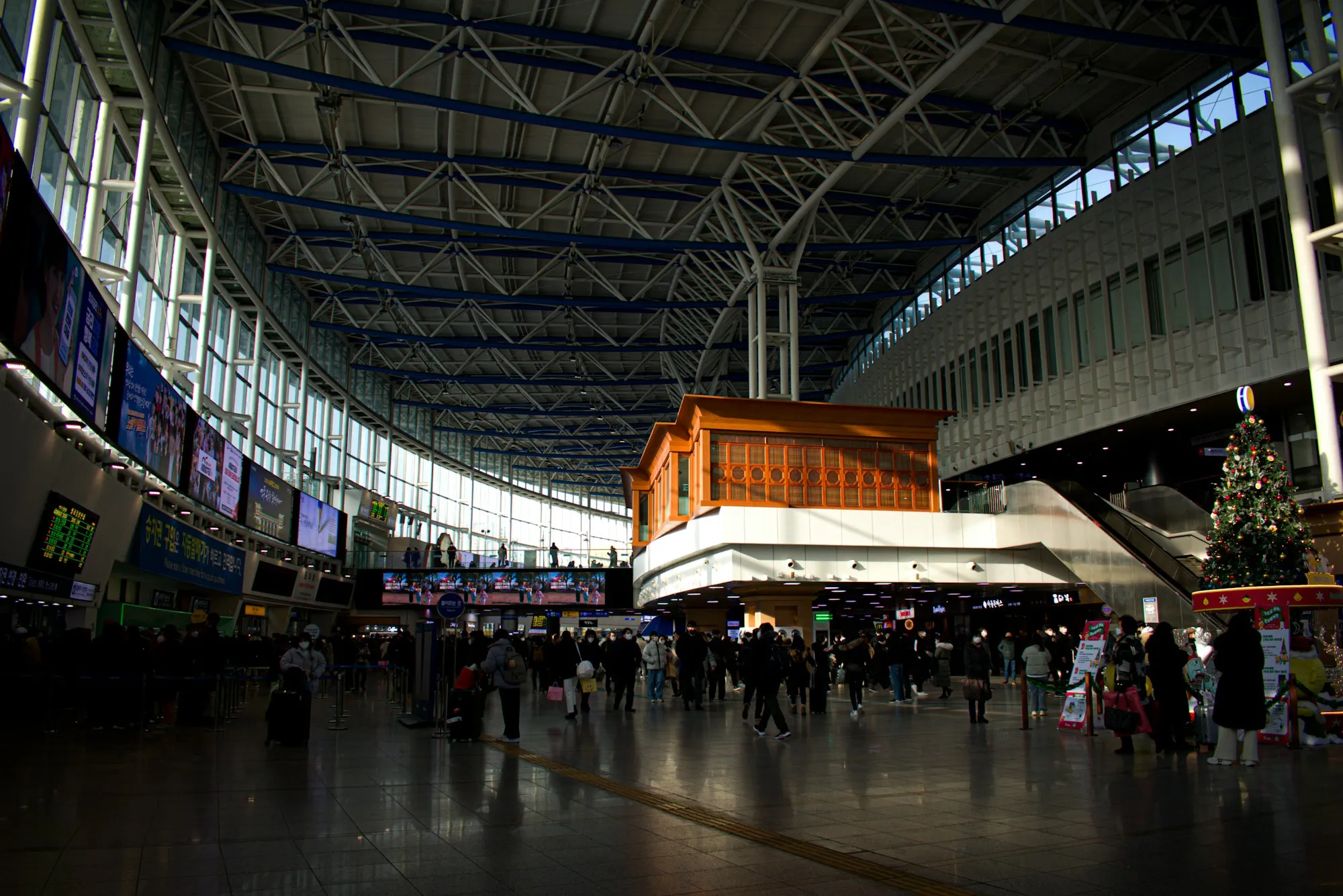
An Mpass costs 15,000 won for one day. Seoul’s own day pass, the Climate Card short pass, costs 5,000 won. Both are sold to visitors, both cover the subway and the city buses, and the cheaper one is run by the city.
The answer for most visitors is the Climate Card. Mpass still has a use, and the interesting part is how narrow it is, and how hard T-money makes it to get the deposit back.
Mpass Seoul price, next to the Climate Card
T-money’s Mpass page prices five passes, in Korean won cash only. Seoul’s Climate Card page prices the same five lengths:
| Days | Mpass | Climate Card short pass |
|---|---|---|
| 1 | 15,000 won | 5,000 won |
| 2 | 23,000 won | 8,000 won |
| 3 | 30,500 won | 10,000 won |
| 5 | 47,500 won | 15,000 won |
| 7 | 64,500 won | 20,000 won |
Buy an Mpass after 5 pm and each price drops by 3,000 won, so a one-day pass is 12,000 won. That discount is less generous than it looks, because T-money counts an Mpass day from the first tap until midnight. Seoul’s page runs a Climate Card day from the first train at 04:00 to the last one, which it says is usually 04:00 the next morning.
The card itself narrows the gap a little. Every Mpass price includes a 5,000 won deposit, and returning the card pays back 4,500 won of it. A physical Climate Card costs 3,000 won on top of the pass, and the 2024 column cited below marks that card price as not refundable, though the card can be recharged on a later trip. Return the Mpass and a one-day pass costs 10,500 won , against 8,000 won for a Climate Card day on a new physical card . Android phones on OS 12 or later can carry the Climate Card as a mobile card instead. Seoul’s page lists bank transfer as the way to pay for it and, in another line, cards in your own name, and it does not say whether a card issued abroad works, so treat the mobile route as one for visitors with a Korean account.
A citizen reporter column on Seoul’s own news portal, published in October 2024, compared the two and put it in one line: Mpass has a ride limit and costs more. It also made the case for Mpass, that the card price is inside the pass price, so the real cost is lower than it looks. Both points stand, and the 10,500 against 8,000 comparison above is what is left once you count them.
Where to buy Mpass Seoul
One counter. T-money’s page lists a single issue and return point for Mpass:
| Where | Detail |
|---|---|
| Counter | T-money Town |
| Address | Seoul City Tower, 1st floor, Seoul Station exit 10 |
| Hours | 09:00 to 18:00 |
| Closed | Weekends and public holidays |
Read the last row as a traveller. The pass for tourists is sold during office hours, on weekdays, in one building. A visitor landing on a Saturday cannot buy one until Monday morning, or later if Monday is a public holiday.
Incheon Airport is not on the list. The 2024 column explains why a guide might still say otherwise: Mpass used to be sold at the airport, and by then was sold only at T-money Town. The columnist called the pass close to defunct and expected the two products to merge into the Climate Card over time. The T-money page still lists it today, so treat that as a forecast.
The Climate Card has the opposite footprint. Seoul sells the physical card from the new ticket machines in Seoul Metro stations on lines 1 to 8 and at nearby convenience stores, and from convenience stores around stations on line 9, the Ui-Sinseol line and the Sillim line.
Mpass Korea airport: why the deposit is hard to get back
The same counter is the only place T-money lists for handing an Mpass back. Return it there and three things happen:
- The deposit comes back as 4,500 won, because 500 won is kept as a fee.
- Any T-money balance on the card comes back too, if at least 500 won is left, minus a 500 won refund fee. The page does not say whether that fee is on top of the deposit fee, so treat it as possibly a second one.
- The card stays with T-money.
Put that next to a normal flight home. Most departures from Incheon are not timed around a weekday office in central Seoul, and the airport is the one place everybody passes on the way out. T-money lists no return point there. So the practical rule is to plan the return before the last day: a Friday for a weekend flight, and before 18:00 the day before for anybody leaving in the morning.
Returning the card is the whole point of the deposit, and the single weekday counter makes it the easiest step to miss. Anyone who keeps the card has paid 5,000 won for it. The balance is not lost, because the card carries an ordinary T-money function and the 2024 column says it can be reused as a plain T-money card, so a return visit is the other way to use it. Whether a convenience store will cash out the balance on an Mpass, the way it does on a plain card, is not on T-money’s page. The plain card rules are on the airport refund page.
Tmoney Mpass Seoul or Climate Card: which covers more
This is the one place Mpass wins. T-money lists where it works:
| Mode | Mpass | Climate Card short pass |
|---|---|---|
| Subway | Seoul-area network | Seoul stations only |
| AREX to Incheon Airport | All-stop train, both ways | Get off at the airport only |
| Buses | Seoul city, late-night, village | Seoul buses, not airport or express |
| Ride limit | 20 a day | None |
The subway row is the real difference. Seoul’s page limits the Climate Card to subway stations inside Seoul, excludes the Sinbundang line and GTX, and gives an example: board at Jongno 3-ga and get off at Indeokwon in Gyeonggi, and the station staff charge the fare. The 2024 column said a few neighbouring cities, Gimpo, Namyangju and Guri, had been added by agreement. Seoul’s current page does not name them in its coverage line, though it does list top-up machines on the Gimpo Goldline, and it offers a coverage search. So treat any stop outside Seoul as a fare until that search or the station says otherwise.
Mpass, on T-money’s page, runs on the Seoul-area subway without that boundary. The 2024 column says it excludes the Sinbundang line too, and gives its reach as Chuncheon to Onyang Oncheon. T-money writes village buses without saying whose, where the Seoul buses in the same line are marked as Seoul’s, so treat a village bus outside Seoul as unconfirmed.
The airport row is smaller than it looks. An Mpass would carry you from Incheon into Seoul on the all-stop train, but it is not sold at the airport, so the first journey it could cover is one you have already paid for by the time you reach Seoul Station. On the way out the Climate Card already lets you get off at Terminal 1 or Terminal 2. T-money excludes the AREX express from Mpass by name.
So Mpass earns its price for a visitor who will spend days riding the subway outside Seoul and can reach Seoul Station on a weekday at both ends of the trip. For anybody else it is the dearer pass with a ride cap.
The small print on both pages
Three rules from the Mpass page are worth knowing before you pay:
- Days run in a row. A 2 to 7-day pass is used on consecutive days, and it cannot be extended or changed partway.
- Unused passes expire. A pass not tapped within 30 days of issue can no longer be used.
- Taxis need a top-up. The card carries a T-money function alongside the pass. Charge it to pay for a taxi or in a shop, since the pass covers neither.
The Climate Card has its own catches, all on Seoul’s page. A physical card has to be registered on the T-money Card & Pay website, and an unregistered card cannot be refunded. A refund has to be requested inside the usage period, and it is the amount charged, minus what you actually rode at normal fares, minus a 500 won fee. A foreigner without a Korean bank account collects it in cash at T-money head office, which the 2024 column identifies as T-money Town at Seoul Station. For a one-day pass that is used up anyway, none of this matters. For a seven-day pass cut short, register the card on the first day.
For the wider choice between cards, and what happened to the 30-day Climate Card, see the Climate Card shutdown page and the T-money card guide. Getting from the airport into the city in the first place is on the Incheon Airport to Seoul page.
What is not checked here
The prices, the deposit, the return rules and the single counter are read off T-money’s Mpass page on 30 September 2026. That page carries no date of its own, so treat it as T-money’s standing description rather than a notice issued this year. The Climate Card prices and rules are from Seoul’s page, last edited on 28 September 2026.
Three things below are unconfirmed, and here is what each one changes:
- Whether T-money Town still has Mpass cards in stock. The page lists the product and nobody publishes the stock. If it has none, the Climate Card is the only multi-day pass left, which changes nothing for a visitor staying in Seoul.
- When airport sales ended. The 2024 column says they had by then. No T-money notice dates it, so treat any airport counter selling Mpass as the exception.
- Whether anyone accepts an Mpass return outside T-money Town. T-money lists no other point. Its customer centre is on 1644-0088 on weekdays, and the foreign language line is 120, then 9, for anybody who wants to ask before flying out.
If you have bought or returned an Mpass recently, tell me where and what happened, and this page will carry the answer with its date.
Questions people actually ask
- Mpass Seoul price: what does each pass cost in 2026?
- T-money's Mpass page lists five passes, payable in Korean won cash only: 1 day 15,000 won, 2 days 23,000, 3 days 30,500, 5 days 47,500 and 7 days 64,500. Buy after 5 pm and each is 3,000 won cheaper. Every price includes a 5,000 won card deposit, of which 4,500 won comes back when you return the card. Seoul's Climate Card short passes cost 5,000, 8,000, 10,000, 15,000 and 20,000 won for the same five lengths, and the physical card for them is 3,000 won on top.
- Where to buy Mpass Seoul, and is it sold at Incheon airport?
- T-money lists one place that issues Mpass: T-money Town, on the first floor of Seoul City Tower, out of Seoul Station exit 10, open 09:00 to 18:00 and closed at weekends and on public holidays. Incheon Airport is not on the list. A 2024 citizen reporter column on Seoul's city news portal says the pass used to be sold at the airport and by then was sold only at T-money Town, so a guide that sends you to an airport counter is describing the older arrangement.
- Mpass Korea airport return: can you get the deposit back when you fly out?
- Not at the airport, going by T-money's own page. The only return point it lists is the same T-money Town counter at Seoul Station, on weekdays from 09:00 to 18:00. Returning the card there pays back 4,500 won of the 5,000 won deposit, plus any T-money balance left on the card minus a 500 won fee, if at least 500 won remains. Someone flying out at the weekend has to return the card by Friday or keep it, and the 4,500 won with it.
- Tmoney Mpass Seoul or Climate Card: which pass covers more?
- Mpass covers more ground and fewer rides. T-money lists the Seoul-area subway, the AREX all-stop train but not the express, Seoul city and late-night buses and village buses, up to 20 rides a day. The Climate Card short pass has no ride limit, but Seoul's page limits its subway use to stations inside Seoul, plus getting off at the two Incheon Airport stations, and excludes the Sinbundang line and GTX. Stay inside Seoul and the Climate Card is cheaper for the same days.
Where these numbers came from
Read on . 3 of 3 are Korean-language primary pages.
- T-money, Mpass for foreigners: prices, deposit, issue and return point, coverage (Korean) KO
- Seoul Metropolitan Government, Climate Card page: short pass prices, coverage, where to buy, refunds (Korean) KO
- Seoul city news portal, citizen reporter column comparing the Climate Card tourist pass with Mpass, 8 October 2024 (Korean) KO