Korea's halal restaurant labels are undated, not current
Cite this page
Hwang, J. (2026). Korea's halal restaurant labels are undated, not current. Korea, Verified. https://koreaverified.com/halal-food-korea-labels/ (checked 21 September 2026)
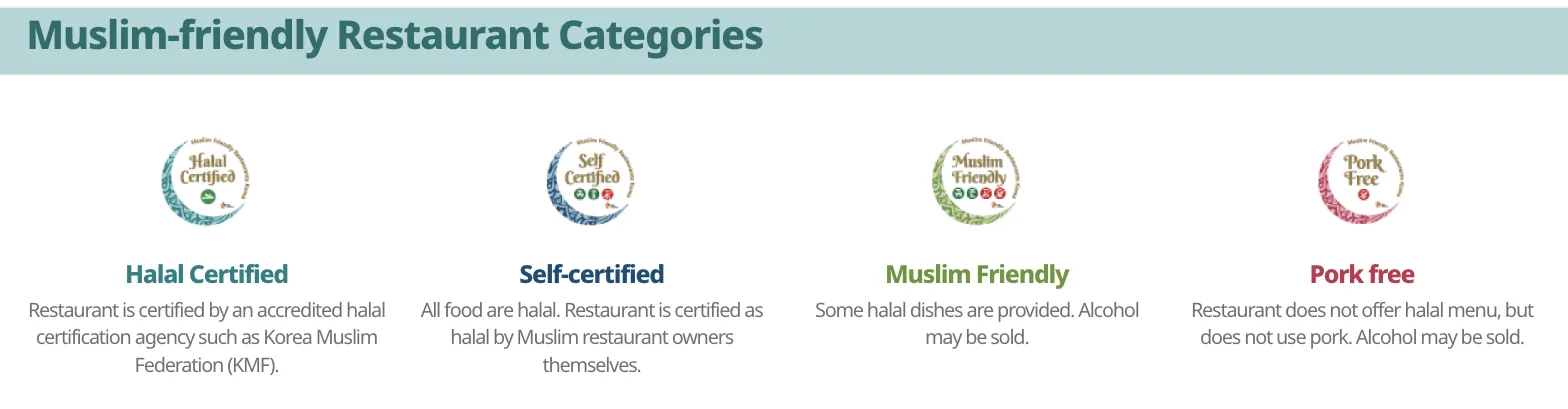
English guides to eating halal in Korea explain the labels the same way, when they explain them at all: Halal Certified, Self-certified, Muslim Friendly and Pork Free, presented as a live rating system.
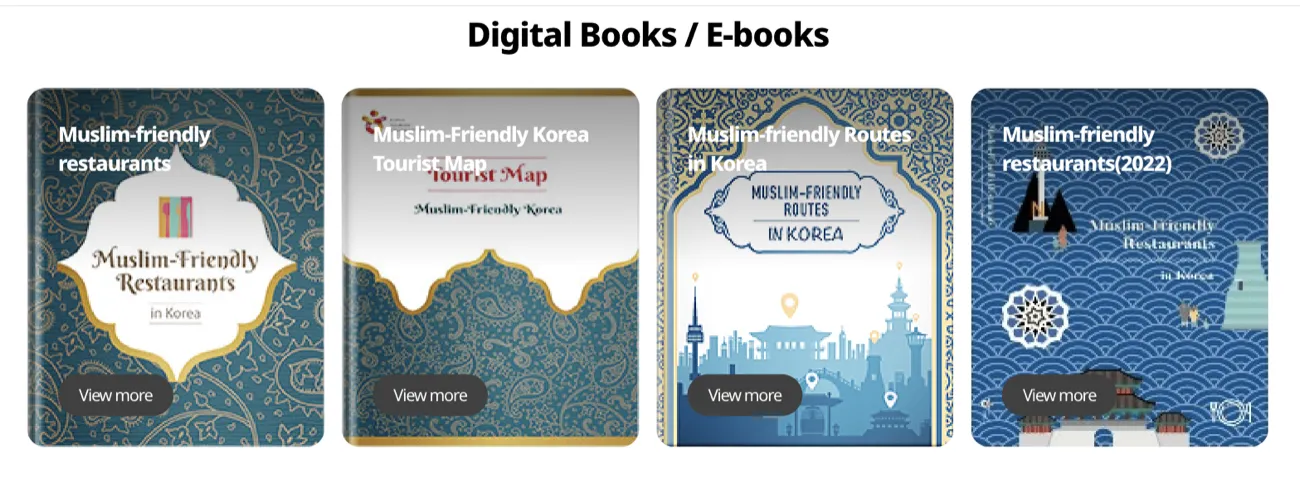
They come from the Korea Tourism Organization, and the page they come from has no date on it. No “last updated”, no notice, nothing. The one thing on it that does carry a year is the restaurant list you can download, and that reads “Muslim-friendly restaurants(2022)”.
So the labels are not wrong. They are undated, which on a question about what a person may eat is a different kind of problem, and it means a tier you read this morning may record a decision made years ago.
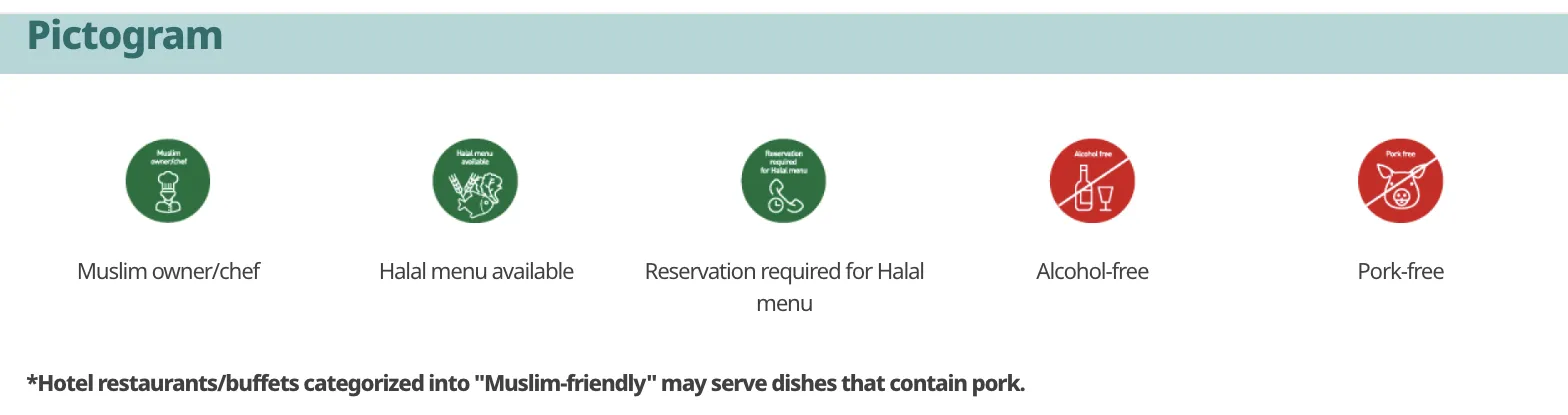
There is a second row of icons under the four labels, and it is the row that carries the detail: Muslim owner or chef, halal menu available, reservation required for the halal menu, alcohol-free, pork-free. A restaurant can hold the Muslim Friendly label and none of the last two. The board says as much itself, in bold, directly beneath them. A hotel restaurant or buffet categorised as Muslim-friendly may serve dishes that contain pork. That is the scheme warning you about its own middle tier, and it is the sentence I would want a traveller to have read before trusting a badge in a hotel lobby.
Is halal food available in South Korea?
Yes. A March 2024 article citing tourism board figures gave 122 restaurants serving halal food in Seoul and 278 across the country, with 29 of the Seoul ones in Yongsan-gu.
Note the noun in that count. It is restaurants serving halal food, which is the whole ladder described below rather than the certified top of it. That is the supply, and it is the part every guide answers. The rest of this page is about the evidence attached to it, because those are two separate questions.
The four labels, quoted exactly
These are KTO’s definitions as they appear on the English page today, word for word including the page’s own grammar.
| Label | KTO’s definition, verbatim |
|---|---|
| Halal Certified | “Restaurant is certified by an accredited halal certification agency such as Korea Muslim Federation (KMF).” |
| Self-certified | “All food are halal. Restaurant is certified as halal by Muslim restaurant owners themselves.” |
| Muslim Friendly | “Some halal dishes are provided. Alcohol may be sold.” |
| Pork free | “Restaurant does not offer halal menu, but does not use pork. Alcohol may be sold.” |
Read down that column and the ladder is steep. The top rung is a third party issuing a certificate. The second is the owner vouching for their own kitchen, which is a real thing to know and is not the same evidence. The third covers part of a menu and tells you alcohol may be on sale. The fourth is a statement about one ingredient, and a kitchen with no pork in it can still be a kitchen where nothing was slaughtered to any standard.
This much is already set out in the Indonesia page’s section on the four labels, which is where this site first wrote them down. What that section did not say, and what this page exists to correct, is that the ladder carries no date.
What the tourism board has said about the project
The classification is older than most English coverage of it suggests. When KTO announced its Muslim Friendly Korea programme in March 2017, it set out a plan to expand Muslim-friendly restaurants to 170 from an existing 135, so the counting was already under way before that release, and that release also describes the restaurants as sorted into four categories. The Ministry of Culture, Sports and Tourism’s tender board still carries a notice for “2020 무슬림 친화 레스토랑 분류제 운영”, with KTO named as the responsible body and a bidding window opening on 6 February 2020, which shows the classification being run as a procured operation at least that year.
Then there is what KTO said in 2024. Asked about halal dining infrastructure, the organisation was quoted as saying the Muslim-friendly restaurant project had been operated only until 2021, and that because it was a two-year certification project it had supplied the information up to the previous year but would not be providing it directly from that year on. In the same answers it said it had no halal food infrastructure project running, and that it planned to take information from outside specialist certification bodies and publicise that instead.
That middle clause is the most useful thing anybody has published about these labels, and it survives translation into arithmetic. The project last ran in 2021. A classification given out under it lasted two years. So the last of them expired in 2023, which is exactly what “supplied the information up to the previous year” means in an article written in 2024.
The tiers are therefore not merely undated. They had a date, and on KTO’s own account it has passed.
Two things about that quotation matter, and I would rather put them here than bury them. The noun KTO uses is the Muslim-friendly restaurant project, not the classification by name, so the link between the project ending and the four-tier classification ending is my reading of two documents rather than a sentence anybody published. And the article carrying it is from Kukinews’ youth reporter programme rather than its news desk, approved on 24 March 2024 and revised on 20 February 2025. It is the only source I found in which KTO addresses this directly, and on a page arguing that undated content misleads, the date on my own best source belongs in plain sight.
What none of that changes is the thing I checked myself. The English page shows the four definitions in the present tense, and says nothing about any of this.
Why an undated label is the specific problem
An expired notice nobody took down reads exactly like current policy. That is the failure mode this site keeps finding in Korean official pages, and here it has a sharper edge than usual, because of where the top tier points.
Halal Certified does not mean KTO checked anything. On KTO’s own wording it means an accredited agency certified the restaurant, and the agency it names is the Korea Muslim Federation. So the strongest label on the ladder is a pointer to a document held somewhere else, and the page does not say when that document was issued or whether anybody has looked at it since.
I looked up the terms behind it. KMF publishes an issuing guide, in force since 1 January 2020, and it is about manufactured food products rather than restaurants: it asks for a factory registration certificate, a product manufacturing report, a process flow diagram and a finished-product test report, and it prices the work per item. Those certificates run one year from issue. I could not find an equivalent published page setting out how KMF certifies a restaurant, what that costs, or how long it lasts.
That gap is worth stating plainly rather than filling in. The tier defers to a certifier, and the certifier’s restaurant terms are not published where I can read them. The one-year figure on KMF’s guide belongs to products, so treat it as a fact about certified food items rather than about a restaurant, and do not carry it across. The dated thing here is the tourism board’s own classification, at two years, which is a different document with a different clock.
How to check a Korean restaurant now
The instruction that replaces the label is short. Ask which body certified the kitchen and ask to see the certificate, rather than reading the sticker.
- If the answer names a certifier and shows you a document, you have moved from a category to evidence, and you can see its date for yourself.
- If the answer is that the owner certifies it, that is the Self-certified tier as KTO defined it. It is a claim by the person cooking, which for many travellers is enough and for some is not, and the distinction is worth making before you sit down rather than after.
- If the answer is that there is no pork, take it at exactly that width.
One structural warning survives the labelling question entirely, because it is about Korean cooking rather than about schemes. Pork stock is used far more widely here than a menu suggests, seafood is fermented into a great deal of kimchi, and neither shows up in a dish name. So ask what the stock is made from. A kitchen that cannot answer has told you something, and that is the only direction this test runs in: an answer given confidently is not evidence, because confidence is free and a certificate is not.
Packaged food is the one place the question gets easier. There the pork line is not a sticker but a legal requirement, printed in a separate allergen box down to extracts, and alcohol is the part it leaves out. That rule, and how to read a convenience-store pack with it, is a page of its own.
If you are still working out whether you need a visa before any of this becomes relevant, that answer is set by your passport and is the first question on this site.
What is not checked here
- Whether the four-tier classification itself was discontinued. KTO’s quoted statement is about the Muslim-friendly restaurant project. The tender notice shows the classification being operated under that heading in 2020. Joining those two into “the classification ended after 2021” is my inference, and I found no notice from KTO retiring the classification by name. What is not an inference is that the English page is undated and its list is labelled 2022.
- How long a KMF restaurant certificate lasts. The one-year validity and the per-item fees on KMF’s published guide belong to its product certification track, which asks for factory paperwork. I found no published restaurant equivalent and have not assumed the terms carry across.
- Whether the classification was procured every year. I found one tender, for 2020. The 2019 and 2021 notices, which would establish a cadence, I did not find, so “run as a procured operation” is as far as one notice takes it.
- Where the 122 and 278 figures were compiled. The March 2024 article attributes them to KTO without saying when they were counted, and given the timing they could have been carried forward from the classification list. Treat them as the best published figures rather than a count taken that month.
- What the 2022 list on KTO’s English page contains. It is offered as a download labelled “Muslim-friendly restaurants(2022)”. I have not opened it, so I have not quoted anything from inside it or counted what is in it.
- A related dataset I decided not to lean on. The Ministry of Culture’s big data platform carries a Muslim-friendly restaurant dataset whose note says that, because the related project ended, its update cycle changed from quarterly to yearly from 2022. It is supplied by a private company rather than by KTO, the note does not name which project it means, and the dataset was itself updated in August 2025. It is suggestive and it is not evidence about KTO’s scheme, so it is here rather than in the argument.
If you hold a current halal certificate for a restaurant in Korea, or you have been told by KTO what replaced the classification, send it here and this page gets corrected with a date on it.
Questions people ask around this
Is halal food available in South Korea? Yes. Figures attributed to KTO in March 2024 were 122 restaurants serving halal food in Seoul and 278 nationwide, 29 of the Seoul ones in Yongsan-gu. Note what that counts, which is restaurants serving halal food rather than certified ones. Finding the food is not the hard part. Working out what has been checked about a particular kitchen is.
Can I trust a Halal Certified sticker in a Korean restaurant window? Trust the certificate rather than the sticker. The tier means an accredited agency certified the kitchen, which is a genuine third-party check, but the page that publishes the tiers has no date on it and its restaurant list is labelled 2022. Ask to see the certificate and look at its date.
What is halal Korean food? Korean dishes cooked to halal rules, which usually means substituting the stock and the meat rather than changing the dish. The obstacle is not the headline ingredient but the base: pork stock is structural in Korean cooking and fermented seafood is common in kimchi, so a halal kitchen has to have decided about both.
Is there a halal food app or official list for Korea? There is no official register the tourism board maintains. KTO was quoted in March 2024 saying it would no longer provide the information directly and would take it from external certification bodies. The list still downloadable from its English page is labelled 2022. Community and commercial apps exist and are often fresher, but none of them is an official source.
Does Pork free mean the food is halal? No. KTO’s own definition of that tier is “Restaurant does not offer halal menu, but does not use pork. Alcohol may be sold.” It is a statement about one ingredient, not about slaughter, cross-contamination or the bar.
Questions people actually ask
- Which logo? Halal Korea uses four restaurant marks, and only one means certified
- The Korea Tourism Organization publishes four, and they are not four grades of halal. Halal Certified points at a third-party certificate from an accredited agency such as the Korea Muslim Federation. Self-certified is the owner certifying the owner. Muslim Friendly means some halal dishes are provided and alcohol may be sold. Pork free means the kitchen offers no halal menu at all but does not use pork, and alcohol may be sold. Only the first involves anyone outside the restaurant, so it is the only one of the four that rests on a document you could ask to see.
- What does a halal sign in Korea actually certify?
- It certifies a category, not a date. The tourism board defines Halal Certified as "Restaurant is certified by an accredited halal certification agency such as Korea Muslim Federation (KMF)", which is a real third-party check. What the mark does not carry is when that check happened or whether it is still in force. The page publishing the definitions has no date on it anywhere, so a sticker in a window tells you which box somebody ticked, and nothing about when.
- Is the halal sign in Korea current, or is the list behind it from 2022?
- The list is from 2022 and says so. The tourism board page offers four downloads, and the only one carrying a year is "Muslim-friendly restaurants(2022)". KTO was quoted in March 2024 saying it had no halal food infrastructure project running, that it would no longer supply the information directly, and that it planned to take it from outside certification bodies instead. So there is no official register being maintained. Community and commercial listings are often fresher, and none of them is official either.
- How do you check the halal sign in Korea is backed by a real certificate?
- Ask which body certified the kitchen and ask to see the certificate, rather than reading the sticker. A tier label tells you what category somebody put the restaurant in; the certificate tells you who checked and when. If the answer is that the owner certifies it, that is the Self-certified tier, which is a claim by the person cooking rather than a third-party check. Both are honest positions and they are not the same evidence.
- What is the difference between Muslim Friendly and Pork Free in Korea?
- They are the bottom two rungs of the same four-tier scheme and neither promises a halal kitchen. KTO defines Muslim Friendly as "Some halal dishes are provided. Alcohol may be sold." Pork free is defined as "Restaurant does not offer halal menu, but does not use pork. Alcohol may be sold." Pork free is a statement about one ingredient, and says nothing about how any other meat was slaughtered. The board adds its own warning to the tier above: a hotel restaurant or buffet categorised Muslim-friendly may serve dishes that contain pork.
Where these numbers came from
Read on . 5 of 6 are Korean-language primary pages.
- Korea Tourism Organization, Muslim-friendly travel and the four restaurant categories (English)
- Kukinews youth reporter programme, Korea Tourism Organization quoted on the Muslim-friendly restaurant project, approved 24 March 2024 (Korean) KO
- Korea Tourism Organization press release on the Muslim Friendly Korea programme, 27 March 2017 (Korean) KO
- Ministry of Culture, Sports and Tourism, tender to operate the 2020 Muslim-friendly restaurant classification (Korean) KO
- Korea Muslim Federation, halal certificate issuing rules for products, in force from 1 January 2020 (Korean) KO
- Culture Big Data Platform, Muslim-friendly restaurant dataset supplied by RedTable (Korean) KO