Halal convenience store Korea: labels flag pork, not alcohol
Cite this page
Hwang, J. (2026). Halal convenience store Korea: labels flag pork, not alcohol. Korea, Verified. https://koreaverified.com/halal-convenience-store-korea/ (checked 3 October 2026)
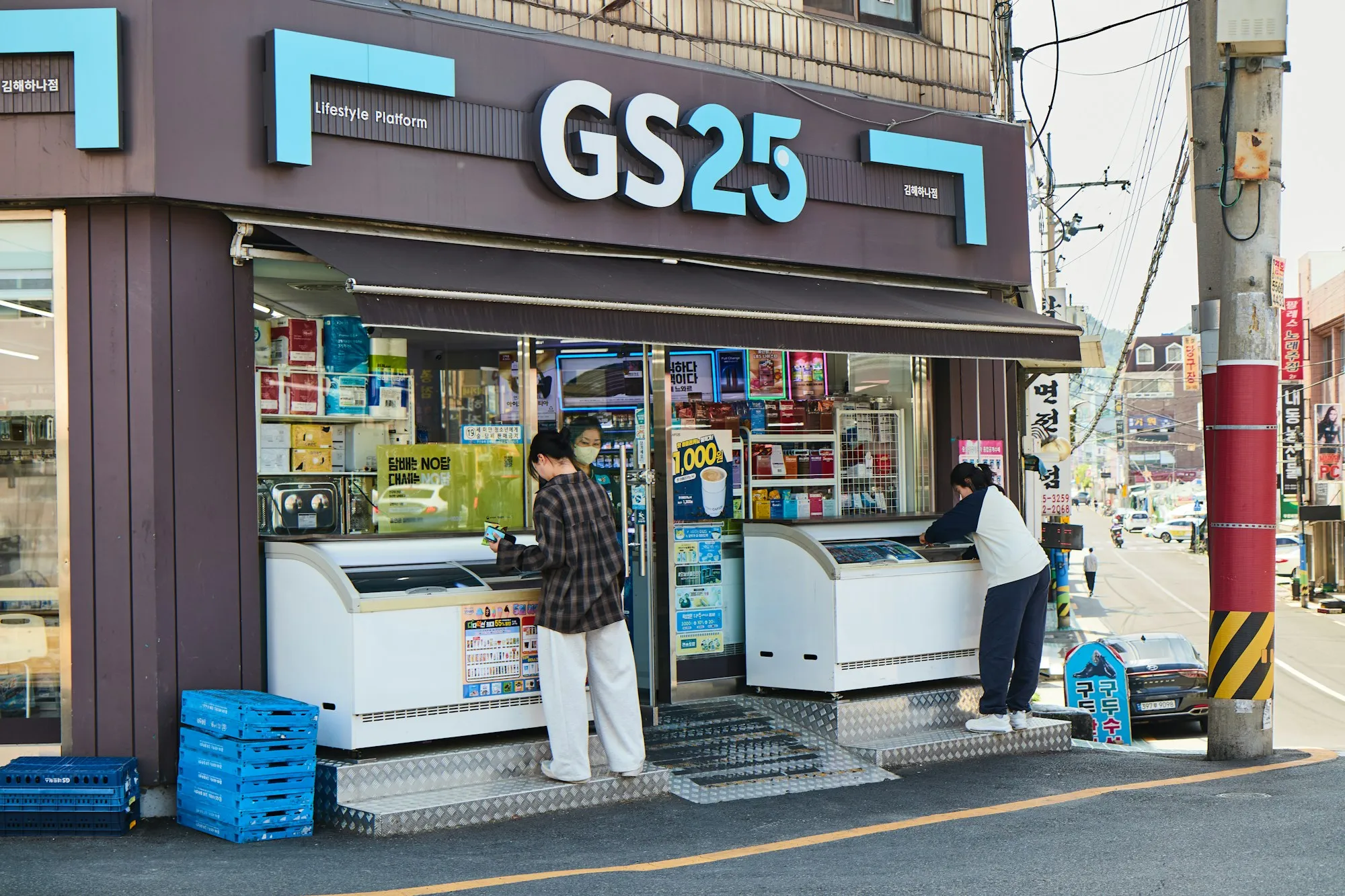
On a halal convenience store Korea run, the labelling law already does the first half of the check for you. Any packaged food that uses pork has to say so in a separate box, and the rule reaches down to extracts in any amount. What the box never shows is alcohol, and that is the half you still have to read yourself.
Which words on a Korean label mean pork, meat or alcohol?
These are the words to look for on the back of a convenience-store pack. The first three are the allergen names the law uses, so they are the ones that appear inside the allergen box. The rest turn up in the ordinary ingredient list.
| Korean | Means | Where you will see it |
|---|---|---|
| 돼지고기 | Pork | Allergen box, by law |
| 쇠고기 | Beef | Allergen box, by law |
| 닭고기 | Chicken | Allergen box, by law |
| 돈육, 돼지 | Pork, pig | Ingredient list |
| 젤라틴 | Gelatin | Ingredient list |
| 라드, 돈지 | Lard, pork fat | Ingredient list |
| 주정 | Spirit, ethanol | Ingredient list only |
| 알코올, 청주, 맛술 | Alcohol, rice wine, cooking wine | Ingredient list only |
| 혼입 가능 | May contain (shared line) | A separate warning line |
The box is easy to find. The rule says it sits near the ingredient list on a background colour that sets it apart, and the rule’s own example is a run of names ending in 함유, “contains”.
Is Korean convenience store food halal? What the allergen box proves
Halal is a certification question, and the label cannot settle it. What the label can do is rule things out, and for pork it does that by law rather than by the maker’s goodwill.
The rule is Annex 2 of the enforcement rule for Korea’s food labelling act. It lists the allergens a pack must declare. Pork (돼지고기), beef (쇠고기) and chicken (닭고기) are all on it, alongside eggs, milk, wheat, peanuts, shellfish and the rest, for 19 in all. Three details make the pork line strong:
- Amount does not matter. The annex says every allergen used as an ingredient must be listed regardless of how much of it is in the product. The ministry’s own consumer explainer, a 2022 post, puts it as “함유된 양과 관계없이”, whatever the amount contained. Pork extract used in a seasoning counts the same as a pork cutlet. The one item on the list with a threshold is sulphites, which is not meat.
- Extracts count. It covers food using a listed allergen, food using a component obtained from such a food “by extraction or similar methods”, and food using either of those. That is a chain three links long.
- It has its own box. The pork line is not buried in a long ingredient list. It sits in a separate, contrasting panel.
So treat 돼지고기 in the box as the maker’s legal statement that pork is in the food. A box without it is the strongest signal the pack gives that pork was not used as an ingredient: the maker was obliged to print the word and did not. That second reading is the useful one, because it clears a shelf of snacks in a few seconds, and it rests on the maker following the rule.
Does the allergen box show gelatin, lard or pork extract?
It should, because of the extraction clause. Gelatin is drawn out of skin and bone, and lard is rendered out of fat. Both come from pork by the kind of method the annex names. The annex itself never uses the words gelatin or lard, so this is our reading of the clause, not a ministry ruling on gelatin.
On that reading, gelatin becomes readable for once. Gelatin in the ingredient list with 돼지고기 in the box is pork gelatin. Gelatin with 쇠고기 in the box is beef gelatin. Gelatin with none of the three meats in the box came from none of them, which leaves a source outside the list, such as most fish.
What it does not tell you is how a beef or chicken ingredient was slaughtered. 쇠고기 in the box says beef is present and nothing more. For that, the only thing on the pack that speaks is a certification mark, and how far a Korean halal mark goes is its own question.
Why does alcohol never appear in the allergen box?
Because it is not on the list. The annex names 19 items, and alcohol, spirit and wine are not among them. So the box on a pack of kimbap or a cup of noodles can look spotless while the ingredient list carries 주정, the word for spirit, or 맛술, cooking wine.
Read that again. The law can chase pork down to an extract of an extract, and it has nothing to say about the rice wine.
The fix is to read one more line. After clearing the box, run your eye down the ingredient list for the alcohol words in the table above. The ingredient list has its own rules about how compound ingredients are written out, and this page has not checked them, so treat a clean ingredient list as strong evidence rather than proof.
When can a Korean label leave the allergen box off?
There is one written exemption. A food made from a single ingredient, or packaged meat and imported meat, may skip the allergen line when the product name is the same as the allergen name. A pack of pork sold as 돼지고기 does not have to repeat the word in a box.
That one rarely matters in a convenience store, where almost everything is a mix. Two other gaps matter more.
The first is food without a package. The rule is about what is printed on the pack, so food handed over a counter from a warmer has no allergen box to read. This page has not checked what, if anything, a shop owes you about counter food, so treat it as unlabelled and ask, or skip it.
The second is the shared-facility line. When a product without pork is made on the same line, by the same staff, with the same equipment or from the same storage as one with pork, and mixing is unavoidable, the annex requires a warning such as 혼입 가능. Its presence is the maker admitting shared production. Its absence proves less. The annex also says the warning is not printed when the product’s own ingredient is a listed allergen, and the wording does not make clear whether that means the same allergen or any of them. So a pack that already names beef in the box may stay silent about a pork line next door. Treat a missing warning as no information rather than as a clean line.
What is changing on Korean allergen labels?
The Ministry of Food and Drug Safety published a proposed amendment on 7 August 2026, notice 2026-386, with comments closing on 17 September. It would add four allergens: sesame (참깨), perilla seed (들깨), almond (아몬드) and cashew (캐슈너트). If it goes through as proposed, the list grows from 19 to 23.
The only start date in the notice’s text, 27 November 2026, belongs to the parent act’s new advertising rules, not to the four allergens. When those would apply, and whether packaging already printed gets time to run out, sits in the attached draft, which this page could not open. So treat the change as proposed and undated.
Nothing in the notice’s main points touches meat or alcohol. So the reading method on this page survives the change, and the box gets four more names on some packs.
How to check a pack at the shelf
- Find the allergen box. If it names 돼지고기, put the pack back.
- If it names 쇠고기 or 닭고기, the meat is there and its slaughter is not addressed. Look for a certification mark, or put it back.
- If the box is clear of all three, read the ingredient list for 주정, 알코올, 청주 and 맛술.
- Look for a shared-facility warning, and decide how much that matters to you. Its absence settles nothing.
A phone camera with live translation will read all of this for you, but it reads the words, not the law. Knowing that the box is compulsory for pork and silent on alcohol is what turns the translation into a decision.
If you need a place to pray near the airport as much as a place to eat, that is mapped too. Travellers from Indonesia will find the visa side, and the group e-visa route, on the Indonesia page.
What is not checked here
- Whether makers comply. Everything above is what the rule requires. This page has not tested any product, so it describes what a label must say, not what any particular label does say.
- How compound ingredients are written out. The ingredient list has its own rules for ingredients made of other ingredients. They decide whether a small amount of cooking wine inside a sauce must be named. That is the next thing worth reading, and until then treat the alcohol check as strong rather than complete.
- Counter food. Fried chicken, fish cake and anything else handed over unpackaged has no box. What a shop must tell you about it is not covered here.
- Which products are certified halal. This page gives a method, not a shopping list. Products and recipes change without notice, and a list would be stale before a reader reached the shop.
- Food a shop packs itself. Chain lunch boxes and kimbap arrive as printed packs. Food a shop makes and wraps on the premises may sit under a different set of rules, and this page has not checked which.
- Whether the allergen amendment is adopted, and from when. The notice is a proposal dated 7 August 2026 and this page will be updated when the final rule is published.
If a pack in front of you contradicts anything here, send a photo of the back of it and this page gets corrected with a date on it.
Questions people actually ask
- Is Korean convenience store food halal?
- Only a halal certification mark speaks to that, so the useful question is what the label can rule out. Korean law makes every packaged food that uses pork print 돼지고기 in a separate allergen box, in any amount and including ingredients extracted from pork. Beef (쇠고기) and chicken (닭고기) are on the same list. Alcohol is not, and nothing on the label speaks to slaughter except a certification logo.
- Halal Korean convenience store food: what should I look for on the pack?
- Find the allergen box first. It is a separately coloured panel next to the ingredient list. If it names 돼지고기, the food uses pork. Then read the ingredient list itself for 주정 or 알코올, because alcohol is not one of the allergens the box has to show. A line saying the product is made in the same facility as pork products is the maker admitting shared production, which can mean staff, equipment, line or storage.
- Halal ramen in Korea convenience store: how do I check a cup noodle?
- Read the allergen box on the cup. Meat-based soup bases show up there as 돼지고기, 쇠고기 or 닭고기, because extracts count under the rule. If the maker followed the rule, a box without any of the three means none of those meats was used as an ingredient. It does not tell you about alcohol or about how any meat was slaughtered, which only a halal certification mark addresses.
- Korean snacks without pork: does the label show pork gelatin?
- It should. The rule covers ingredients obtained from pork by extraction and similar methods, and gelatin is drawn out of skin and bone. The rule does not name gelatin, so that reading is ours rather than the ministry's. On it, gelatin in the ingredient list with 돼지고기 in the allergen box is pork gelatin, and gelatin with no pork, beef or chicken in the box came from none of those.
Where these numbers came from
Read on . 3 of 3 are Korean-language primary pages.
- Enforcement Rule of the Act on Labeling and Advertising of Foods, Annex 2, labelling for consumer safety: the allergen list, extracts, the separate box, the exemption and the shared-facility warning (Korean, law.go.kr) KO
- Ministry of Food and Drug Safety, Food Safety Korea portal: allergen labelling explained for consumers, post of 1 September 2022 (Korean) KO
- Ministry of Food and Drug Safety, notice 2026-386 of 7 August 2026, proposed amendment adding four allergens (Korean) KO