Does Korean food have alcohol? A clean label is not a no
Cite this page
Hwang, J. (2026). Does Korean food have alcohol? A clean label is not a no. Korea, Verified. https://koreaverified.com/does-korean-food-have-alcohol/ (checked 4 November 2026)
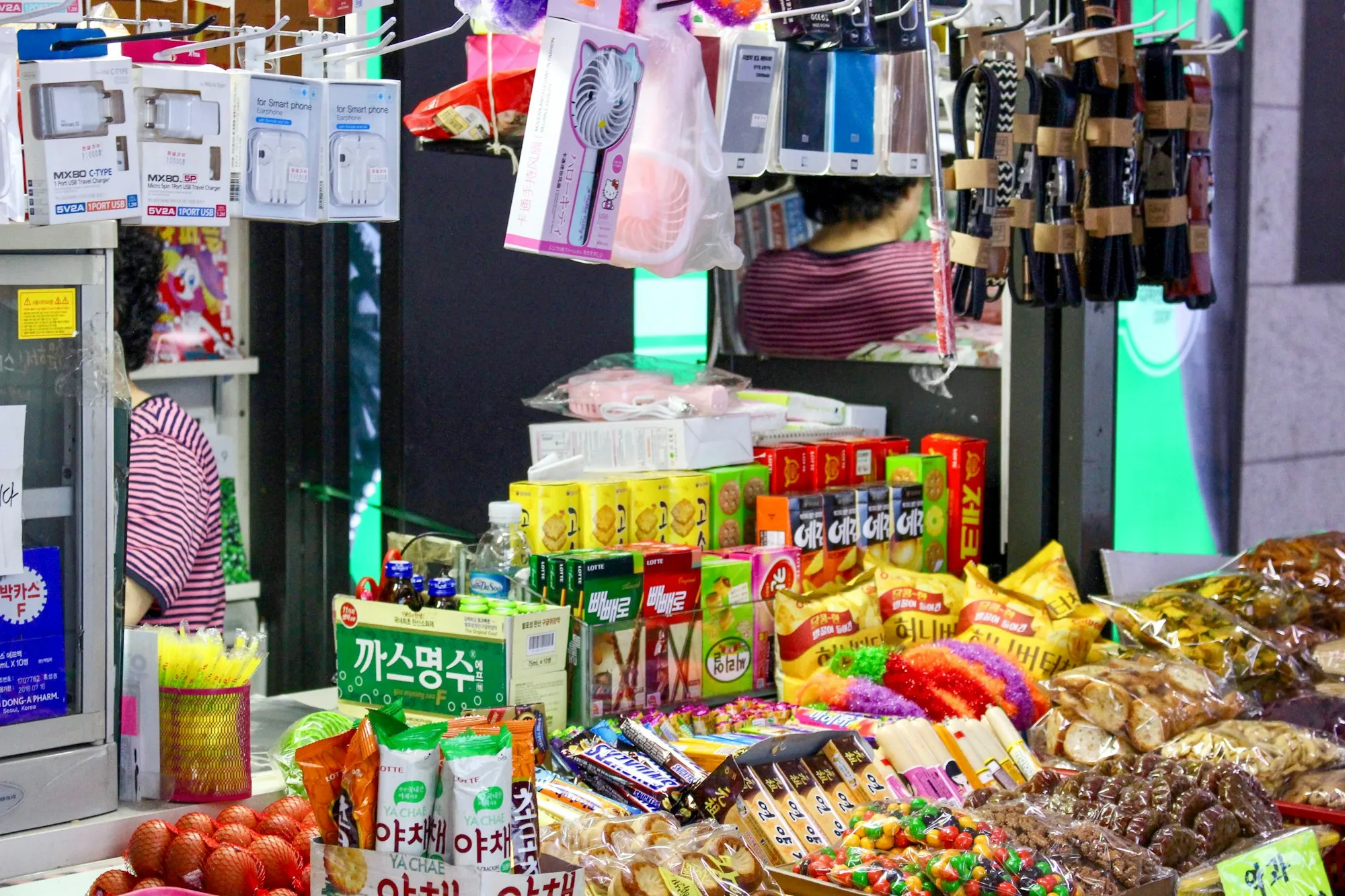
Does Korean food have alcohol? Some does, and the label will not always tell you. Both English guides read for this page send you to the label or the maker. Neither mentions what the Korean standard lets a label leave out.
Which alcohol words appear on a Korean food label?
These are the words to look for, and the list is not closed. Anything ending in 술 (liquor) or 주 (the same idea in a compound word) deserves a second look. They sit in the ordinary ingredient list and never in the allergen box.
| Korean | Means | Seen on |
|---|---|---|
| 주정 | Ethanol, often printed as “spirit” | Gochujang, soy sauce |
| 쌀발효증류주 | Distilled fermented rice spirit | Gochujang |
| 알코올 | Alcohol | Not in the listings read |
| 청주 | Rice wine | Not in the listings read |
| 맛술 | Cooking wine | Not in the listings read |
The “seen on” entries come from Costco Korea’s undated listings for a Haechandle gochujang, a Sempio soy sauce and a Chung Jung One gochujang. That is three products at one retailer, so treat it as proof the words get printed and as no measure of how common they are. The last three words come from this site’s convenience store guide.
Can a Korean label leave alcohol out?
Yes. Annex 1 of the Standards for Labelling of Foods holds at least four routes, and the list below may not be complete. The basic rule asks for every ingredient used, in order of amount. Three of the routes come from the clause on compound ingredients, meaning ingredients that are themselves processed products, such as a sauce going into a ready meal.
| Situation | The label must show | What can go missing |
|---|---|---|
| Compound under 5% of the product by weight | Its name or food type | Its contents, allergens aside |
| Compound at 5% or more | Its name or type, then five or more sub-ingredients | Ranks past five |
| Compound inside a compound | Its name or food type | Its contents, allergens aside |
| Main display area of 30㎠ or less | Five or more ingredients | The rest of the recipe |
Take a ready meal with a small amount of soy sauce in it. If that sauce counts as a compound and sits under 5%, the annex lets the pack print its name and stop. Any 주정 in it then stays in the sauce maker’s recipe.
The second row rests on more than the annex, which says only “five or more”. A Ministry of Food and Drug Safety answer reported in 2021 says that once five are printed, ranks six and seven need not be. Water does not count towards the five. A private labelling guide reads it the same way for everything after the fifth.
Position in the list also says little about the small items. Ingredients under 2% of the weight may appear out of order. Makers may print more than the minimum, because the annex lets them drop a compound’s food type and list every ingredient.
Why does the allergen box catch pork when the list misses alcohol?
Because they are two different rules. The allergen rule applies regardless of amount and reaches extracts, and that is what makes the pork check at a convenience store strong. A private labelling guide states that allergens stay compulsory whatever the compound’s share. Alcohol is on no such list, so it falls under the 5% clause like any other ingredient.
So the two halves of a pack carry different weight. Pork in the recipe would have obliged the maker to print 돼지고기, so a box without it rests on that rule being followed, and the box has exemptions of its own, set out on that page. With no 주정 in the list, the maker may simply not have had to print it.
Is gochujang halal?
It depends on the product, and that decision belongs to certifiers and scholars rather than to this page. A SeekersGuidance answer dated February 2024 calls gochujang generally permissible on its usual ingredients, says wine alcohol would change that, and tells readers to contact the maker.
The Korean listings above show why the maker matters. Two gochujang products print an alcohol word, and HalalSpy reports that some commercial brands add rice wine or grain alcohol as a preservative or for flavour.
A tub is not exempt from the cut-offs either. The Haechandle listing shows a compound, 고추양념, followed by exactly five items in brackets. Whether a sixth existed cannot be told from the label.
Is gochujang with alcohol halal?
That turns on where the alcohol came from, and the two texts read for this page do not address the same case. LPH LPPOM, an Indonesian halal inspection body, cites MUI Fatwa Number 10 of 2018: ethanol is permitted when it does not come from alcoholic beverages (khamar) or haram ingredients and is not medically harmful. That article gives no numeric limit.
SeekersGuidance defines wine as alcohol from fermented grapes and dates, and allows incidental traces of non-wine alcohol under conditions. It says nothing about rice wine or about 주정 added on purpose.
The word itself is disputed too. LPPOM explains 주정 as a solvent for food processing rather than liquor. Korea’s food code puts 주정 in its liquor chapter, as ethanol that can be drunk once diluted. A label does not state where its 주정 came from, so take the question to the maker or to your own scholar.
Is Korean ramen halal, and which Korean ramen is halal?
Only a certification mark answers either question, and this page keeps no product list because recipes change without notice. Read the pack in this order:
- Look for a halal mark and note who issued it.
- With no mark, read the allergen box. 돼지고기, 쇠고기 or 닭고기 there means that meat or an extract of it is in the recipe.
- Read the ingredient list for the alcohol words at the top of this page, and scan any QR code on the pack, because some ingredients may sit behind it.
- Find any compound seasoning. With no brackets it may be a cut-off, and with exactly five items in brackets it may be one too. Ask the maker, or leave it.
Neither guide read for this page reaches step 4. The label cannot show you what it was allowed to drop, so a seasoning line leaves the alcohol question open.
What is not checked here
- The consolidated current text. The clause was read from the Annex 1 file on law.go.kr, which has no printed date and whose file metadata says October 2023. The same rule appears in the 2021 report above. Notices 2024-41, 2025-27, 2025-60 and 2026-37 followed, and their published summaries do not mention compound ingredients. Their attachments were not read, and foodlabel.kr cites the clause under a different number, so treat 5% as a reading of that file.
- QR labels. Notice 2025-60 of 29 August 2025 created QR labelling. A July 2026 report on a ministry e-label guideline says some ingredients may move behind the code while allergens stay on the pack, and a February 2025 report on the draft said the printed label would keep the top three ingredients. The final text was not read, so the table above is not confirmed for a pack using e-labels.
- The allergen rule’s age. The Annex 2 file read is headed as amended in 2020. Later changes to it are not checked here.
- Alcohol that forms by itself. The annex speaks of ingredients used, and fermentation can make alcohol inside a product. Kikkoman, a Japanese maker, says its soy sauces hold more than 2% alcohol by volume from fermentation. A 2016 Korean study of shelf soy sauce is now read on the page on whether soy sauce is halal. Whether a label must show such alcohol is still not confirmed.
- Flavourings. The annex lets a flavouring appear as 향료 alone. Whether ethanol can arrive inside one was not checked.
- The legal definition of a compound ingredient. The plain description above follows the agriculture ministry’s gloss, a processed raw material, given in a note on origin labelling. The standard’s own definition was not read.
- Alcohol used and then removed. The annex excuses food additives removed from the final product. The food code lists 주정 in its liquor chapter, which leans against that excuse applying, but whether it is also a listed additive was not checked, and no ruling on it was read.
- Any actual pack. The listings are retailer pages with no date, and no product was tested. This page describes what a label may leave out, not what any maker does leave out.
- How strong 맛술 is. Products sold under that word differ, and their current food type was not established.
- Restaurant food. A table has no ingredient list at all, so none of this applies there. Ask the kitchen about 맛술 and 청주 by name.
If a pack in front of you shows something this page says it need not, or the ministry has changed the clause, send a photo or the notice and this page gets corrected with a date on it.
Questions people actually ask
- Does Korean food have alcohol?
- Some does. Korean retail listings print 주정 (ethanol) in gochujang and soy sauce, and a distilled rice spirit in another gochujang. A pack that names none of these has not proved anything, because a Korean label may show a compound ingredient under 5% of the product by weight by its name alone. Only a halal certification mark or the maker can settle a specific product.
- Is gochujang halal?
- It depends on the product, and this page does not rule on it. A SeekersGuidance answer of 2024 calls gochujang generally permissible on its usual ingredients, says it is not permissible if it contains wine alcohol, and tells readers to contact the maker. Some Korean gochujang lists 주정 or a rice spirit, so read the tub and look for a certification mark.
- Is gochujang with alcohol halal?
- That turns on where the alcohol came from, and this page does not rule on it. The Indonesian halal inspection body LPH LPPOM, citing MUI Fatwa Number 10 of 2018, says ethanol is permitted when it does not come from alcoholic beverages or haram ingredients and is not medically harmful. A label does not state the source of its 주정, so ask the maker or look for a certification mark.
- Is Korean ramen halal?
- Only a halal certification mark speaks to that. The allergen box on the pack shows any pork, beef or chicken, extracts included. It never shows alcohol, and the ingredient list may not show alcohol inside a small compound ingredient, so a meat-free box leaves that question open.
- Which Korean ramen is halal?
- The ones carrying a halal certification mark on the pack you are holding. This page keeps no product list, because recipes change without notice and a list goes stale. Check the mark and who issued it on the pack itself, then read the allergen box the way the convenience store guide on this site sets out.
Where these numbers came from
Read on . 14 of 19 are Korean-language primary pages.
- Standards for Labelling of Foods, Annex 1, detailed labelling rules, section on ingredient names (Korean, law.go.kr; read page by page, carrying no printed date) KO
- Enforcement Rule of the Act on Labeling and Advertising of Foods, Annex 2: the allergen list, extracts and the separate box (Korean, law.go.kr) KO
- Food Journal (foodnews), Ministry of Food and Drug Safety answers on ingredient names, 28 January 2021: the 5% rule, ranks past five, the 2% order rule (Korean) KO
- Ministry of Agriculture, Food and Rural Affairs, note on origin labelling of 11 September 2019, a separate rule, used here only for its gloss of compound ingredient (Korean) KO
- Ministry of Food and Drug Safety, notice 2026-37 of 12 May 2026, partial amendment of the Standards for Labelling of Foods (Korean) KO
- Ministry of Food and Drug Safety, notice 2025-60, partial amendment of the same standard (Korean) KO
- Ministry of Food and Drug Safety, notice 2025-27, partial amendment of the same standard (Korean) KO
- Ministry of Food and Drug Safety, notice 2024-41, partial amendment of the same standard (Korean) KO
- Food Code, liquor chapter, definitions of 청주 and 주정 (Korean, foodsafetykorea.go.kr) KO
- foodlabel.kr, a private labelling tool and not an official answer: the 5% rule, ranks past five, allergens staying compulsory (Korean) KO
- Costco Korea listing, Haechandle gochujang, ingredient list, undated (Korean) KO
- Costco Korea listing, Chung Jung One Sunchang gochujang, ingredient list, undated (Korean) KO
- Costco Korea listing, Sempio organic soy sauce, ingredient list, undated (Korean) KO
- LPH LPPOM, why the word spirit appears on Korean halal sauces, 6 October 2025
- SeekersGuidance, Is Gochujang Halal?, 6 February 2024
- HalalSpy, Is Korean Food Halal?, 5 May 2026
- Vegannews, report on the ministry e-label guideline, 7 July 2026 (Korean) KO
- FoodNavigator, report on the draft e-labelling rules, 10 February 2025
- Kikkoman USA, FAQ on alcohol in its soy sauces (a Japanese maker, undated)