Can I bring Chinese medicine to Korea: a gram limit per herb
Cite this page
Hwang, J. (2026). Can I bring Chinese medicine to Korea: a gram limit per herb. Korea, Verified. https://koreaverified.com/bring-chinese-medicine-to-korea/ (checked 2 November 2026)
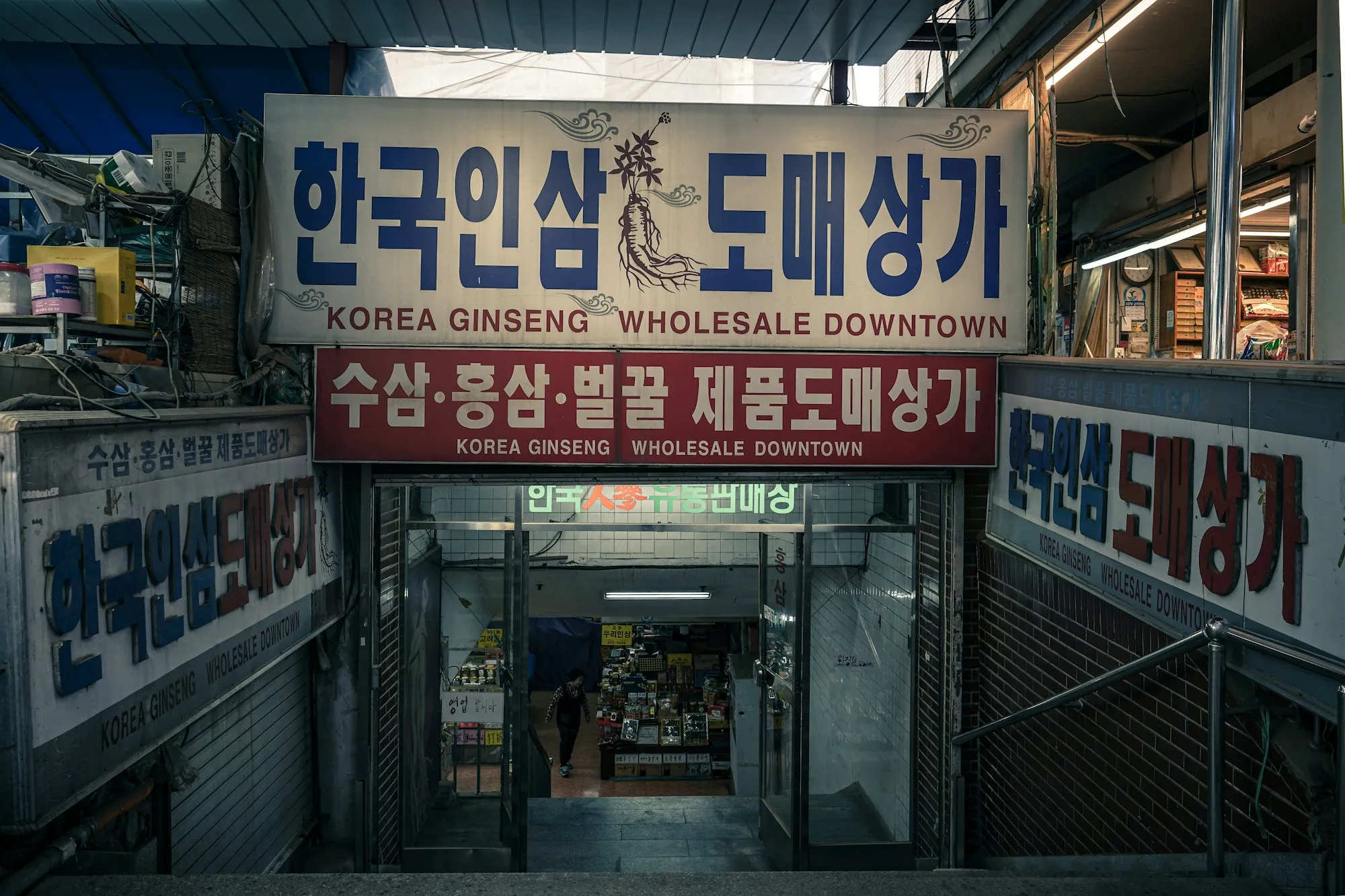
Yes, you can bring Chinese medicine into Korea, and the limit depends on the form. Raw herbs go by weight: Incheon Airport Customs allows 300g of ginseng, 150g of deer antler, 300g of Sanghwang mushroom and 3kg of any other herb, per item, duty-free. Named ready-made herbal products such as pills and ampoules go by count, in bottles, boxes or pills. The raw herbs sit inside a 40kg total and a 100,000 won purchase-price ceiling.
The ordinary medicine rule of 6 bottles or 3 months’ supply, covered on the page about bringing medicine into Korea, is a different rule from both.
Can I bring Chinese medicine to Korea? The limit for each herb
Chinese medicine in raw form is duty-free up to these weights, from Incheon Airport Customs’ arrival guide, read on 2 November 2026. The page shows no date.
| Herb | Duty-free limit |
|---|---|
| Ginseng (fresh, white, red and similar) | 300g |
| Deer antler | 150g |
| Sanghwang mushroom | 300g |
| Any other herb | 3kg per item |
“Per item” means each herb is counted on its own. 3kg of licorice and 3kg of angelica root are two items, though the 40kg total and the value ceiling below still apply to both together.
What are the 40kg and 100,000 won limits?
The 40kg total and the 100,000 won ceiling cover all farm, forestry, fishery, livestock and herbal goods together. The customs line reads “total weight within 40kg, total overseas purchase price within 100,000 won”, and the Incheon page adds that goods covered by plant or livestock-disease law qualify only if they pass quarantine.
So the gram limits are a ceiling on weight, and the 100,000 won is a second, separate ceiling on what you paid abroad. The page does not say what happens when the price ceiling is passed while the weight is still under the limit, so treat the goods as declarable and use the customs declaration rather than the green lane.
The headline US$800 allowance on the national customs page is where this group is counted from. That page puts farm-product limits inside the US$800, with 5kg per item and 40kg in all. It does not mention herbs, but Incheon’s page puts herbs in the same 40kg group, so my reading is that herbs count inside the US$800, not on top of it.
What does the English customs page leave out?
The English allowance page prints three herb rows, ginseng, deer antler and “other oriental medicine materials”, and leaves out Sanghwang mushroom at 300g. It also has no equivalent of the Korean page’s separate table for named ready-made herbal products.
The same English page prints a personal allowance of US$600. The Korean pages and a second English page, the Customs Clearance Guide for Passengers, give US$800. The English page shows no date, so treat the US$600 as out of date and read the Korean figure.
An English reader packing sanghwang mushroom, then, is relying on a table that does not list it. The Korean line is the one that applies.
Do ready-made herbal pills and ampoules have their own limit?
Yes. Incheon Airport Customs prints a second table for named ready-made herbal products, counted in bottles (병), boxes (갑) and pills (알) rather than grams. The table names eleven products, among them 제조환, 녹용복용액, 활락환, 안심봉황, 다편환, 삼편환 and 백봉환.
Four of the pairings were read the same way in two separate readings of the page text: 제조환 (8g) 20 bottles, 녹용복용액 (12 ampoules) 3 boxes, 활락환 10 pills and 백봉환 30 pills. Neither reading was against the rendered table, so treat these four as the page text’s count and open the Incheon page to confirm the number for your product before you pack. The other seven products are on that table too, and this page leaves their counts out because the unit glyphs in their names did not read cleanly.
A herbal product that is not on the list is not covered by that table. Whether it counts as an “other herb” or as medicine under the 6 bottles or 3 months rule is not stated on the page, so ask the customs office before you travel.
Which herbs are restricted whatever the gram limit?
Animal and plant herbs on the national customs page’s declare list are restricted whatever the gram limit. That page names the animal herbs 웅담 (bear bile) and 사향 (musk), and the plant herbs 목향, 구척 and 천마, plus herbal products or medicines made with them.
The page adds that import-restricted goods need their clearance requirements met “regardless of the duty-free range”, so a gram limit does not rescue them. The English passenger guide places oriental medicine made with bear bile and musk among CITES-restricted goods.
I could not read from the page whether ginseng falls under a CITES schedule. It is listed in the allowance table as an ordinary duty-free item, so treat the 300g as the rule, and ask customs if your root is wild-collected.
What happens above the limit?
Declare it. Customs says anything over the duty-free range is subject to declaration, gifts received abroad included, and that goods judged to be commercial rather than personal use get no allowance at all.
Declaring first cuts the duty by 30%. Incheon’s page caps that reduction at 20만원, which is two hundred thousand won. Not declaring costs a penalty of 40% of the tax due, 60% for a repeat within two years, and the goods can be seized. The customs declaration page walks through the app and the web form.
What is not checked here
Every figure above comes from four customs pages, two Korean and two English, read on 2 November 2026. None carries a publication date, so treat them as the current text with an unknown last-edited date, and phone Incheon Airport Customs if a large purchase depends on a gram.
Not checked: the ready-made herbal product table against the rendered page, the counts for seven of its eleven products, whether ginseng is under a CITES schedule, the tax rate when the 100,000 won ceiling is passed, and whether quarantine applies to a specific root or dried herb. The Ministry of Food and Drug Safety was not consulted about herbal medicine sold as a medicine. If customs handled your herbs differently from this page, tell me and the page will say so with the date.
Questions people actually ask
- Can I bring Chinese medicine to Korea?
- Yes. Raw herbs go by weight per item, and a separate list of named ready-made herbal products goes by count in bottles, boxes or pills. The raw-herb limits are ginseng 300g, deer antler 150g, Sanghwang mushroom 300g and other herbs 3kg each, according to Incheon Airport Customs. Those limits sit inside a 40kg total and a 100,000 won purchase-price ceiling for farm and herbal goods. Animal herbs such as bear bile and musk are on the customs declare list, where the gram limits do not clear them.
- How much ginseng can I bring to Korea?
- 300g duty-free, and customs says that figure covers fresh, white and red ginseng alike. Above 300g the goods are declarable, and the English customs page says the whole price of the goods becomes the dutiable value once a unit goes over its allowance.
- Is there a limit on deer antler in Korea customs?
- Yes, 150g of deer antler is the duty-free limit in Incheon Airport Customs' arrival guide. Deer antler is a farm and herbal product, so it also counts toward the 40kg total and the 100,000 won purchase-price ceiling that page sets for that group of goods.
Where these numbers came from
Read on . 2 of 4 are Korean-language primary pages.
- Incheon Airport Customs, arrival guide: duty-free allowance for farm products and herbal medicine, 40kg and 100,000 won, self-declaration reduction and penalty (Korean, undated, read 2 November 2026) KO
- Korea Customs Service, traveller baggage clearance: US$800 allowance, goods to declare, restricted animal and plant herbs (Korean, undated, read 2 November 2026) KO
- Korea Customs Service, English page: duty-free allowances for travellers, ginseng 300g, deer antlers 150g, other oriental medicine materials 3kg each, US$600 (undated)
- Korea Customs Service, English Customs Clearance Guide for Passengers: 40kg and 100,000 won rule, oriental medicine among CITES-restricted goods (undated)